Roofing Basics for Homeowners
Roofing basics every homeowner should know before calling a roofer — what a roof system includes, why shingles are only one piece, and which terms to recognize on a quote.
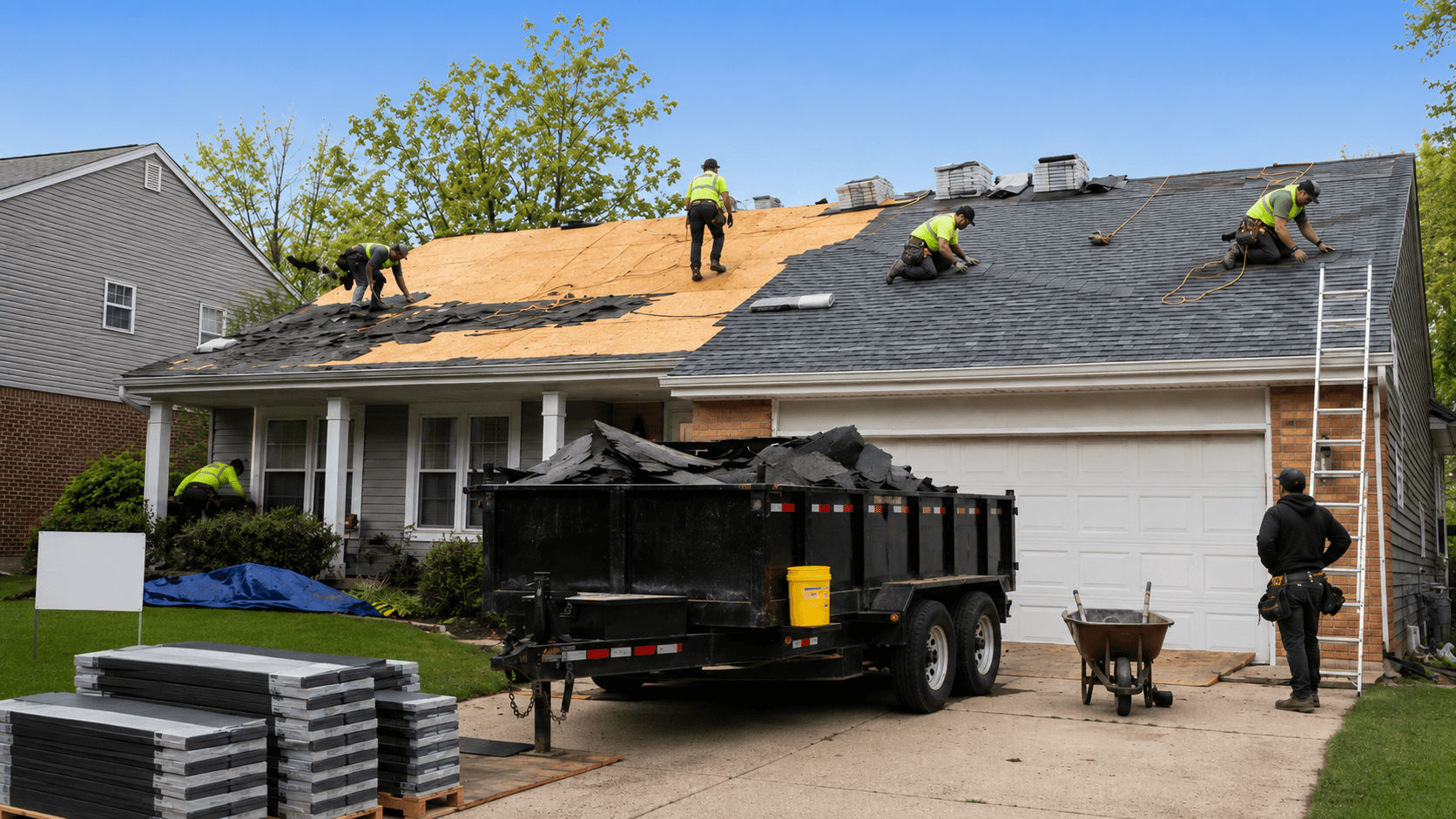
Most homeowners don't think about roofing in detail until something goes wrong — which is exactly why a contractor's quote can feel impossible to evaluate. This guide breaks down what a roof system actually includes, why shingles are only one piece of it, and which terms to know before calling a roofer or comparing quotes. The goal isn't to turn you into a roofer; it's to give you enough context to ask the right questions and recognize what's missing from a quote.
What a roof system actually includes
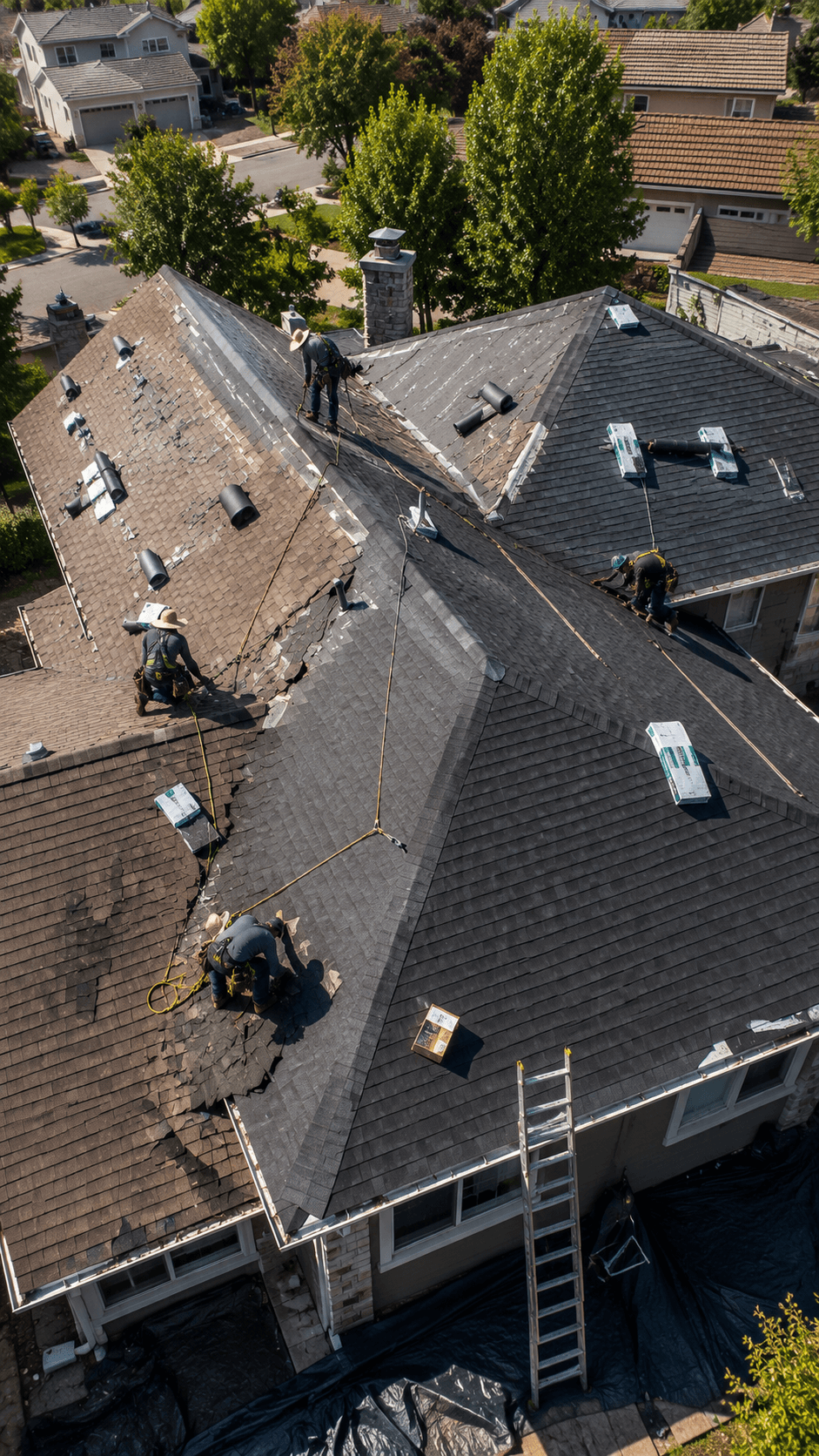
A roof isn't a single object — it's a stack of layers and components, only the topmost of which (shingles or tile) is visible from the street. The full system includes drip edge along the perimeter, starter strip, the shingle or tile field, flashing around penetrations and transitions, ridge caps along the peak, underlayment beneath the visible material, ice and water shield in high-risk zones, the roof deck (typically 1/2" or 5/8" plywood or OSB), and the framing underneath. Ventilation cuts through the roof at ridge and soffit. A roofing quote that addresses only 'shingles' describes maybe 20% of what's actually being installed.
Why shingles are only one part of the roof
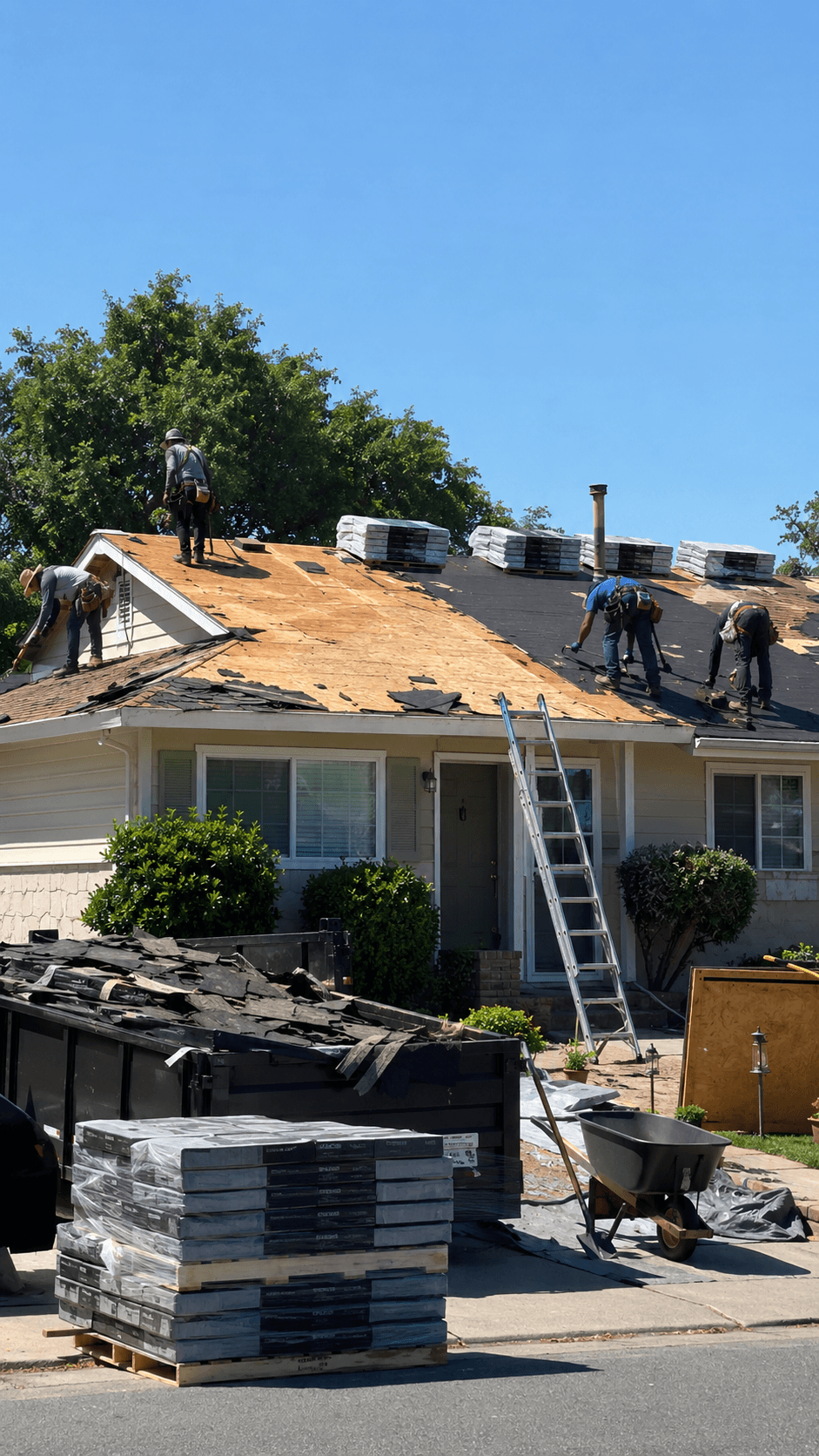
Shingles get most of the homeowner attention because they're what you see. But shingles fail much less often than the system underneath them. Most leaks come from flashing (where the roof meets a chimney, wall, vent, or skylight), worn underlayment, deck rot, or failed sealing around penetrations — none of which involve the shingles themselves. A 22-year-old roof with intact-looking shingles can still fail at flashing or underlayment. Spending all your decision-making attention on shingle brand and color is a common homeowner mistake; the parts of the roof you can't see drive more leak risk than the parts you can.
The role of roof decking
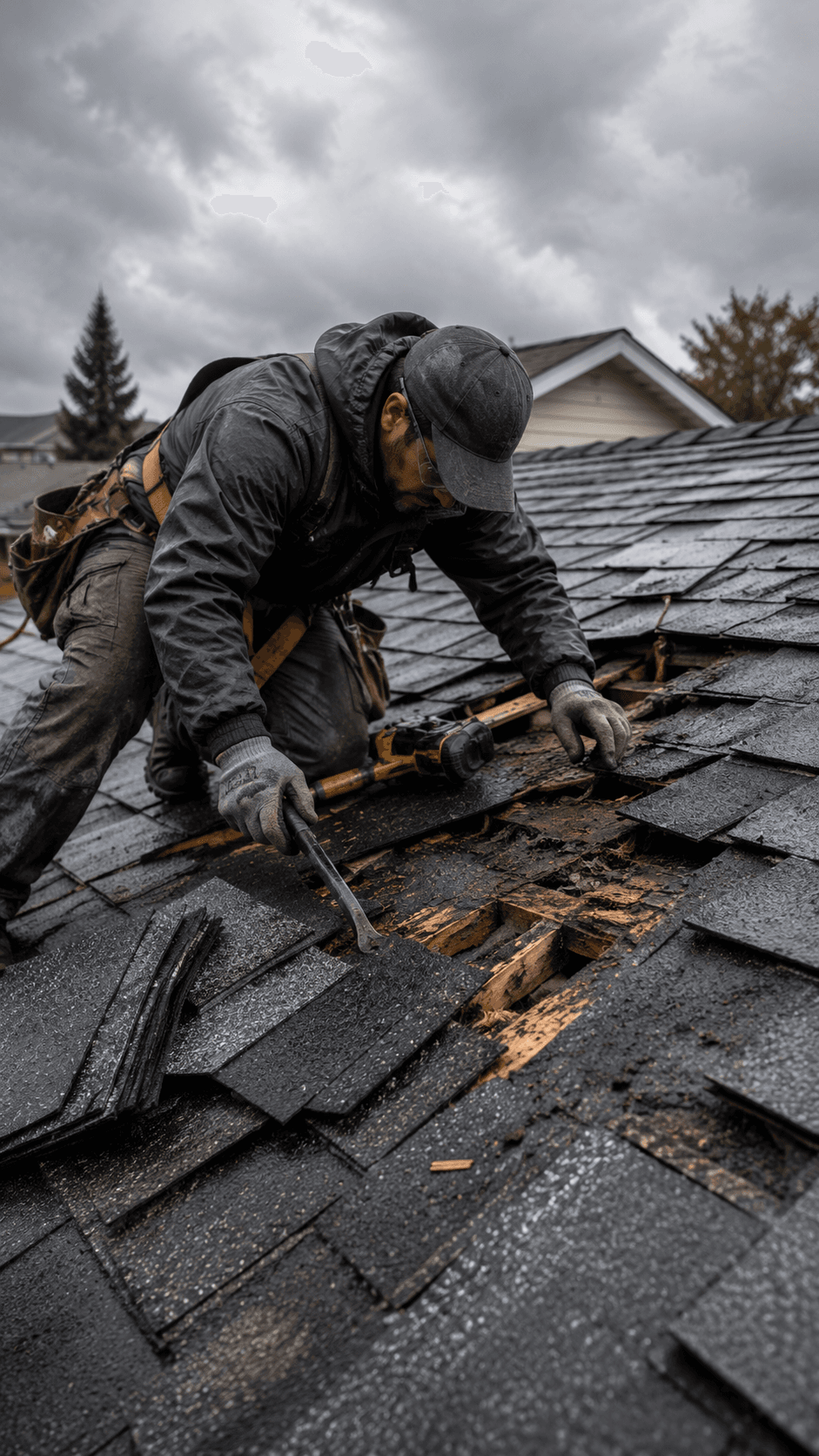
The deck is the structural plywood or OSB layer that everything else sits on. It runs across the rafters and gives the underlayment, ice/water shield, and shingles something to nail into. During a tear-off, the deck gets exposed for the first time in 20+ years, and rot is sometimes found — usually from old leaks the homeowner didn't know about. Quotes typically include 'up to 2 sheets' of deck replacement; anything beyond that is a change order at $80–$120 per sheet. A quote silent on deck replacement either bakes a buffer into the price or leaves the change-order risk entirely on you.
The role of underlayment
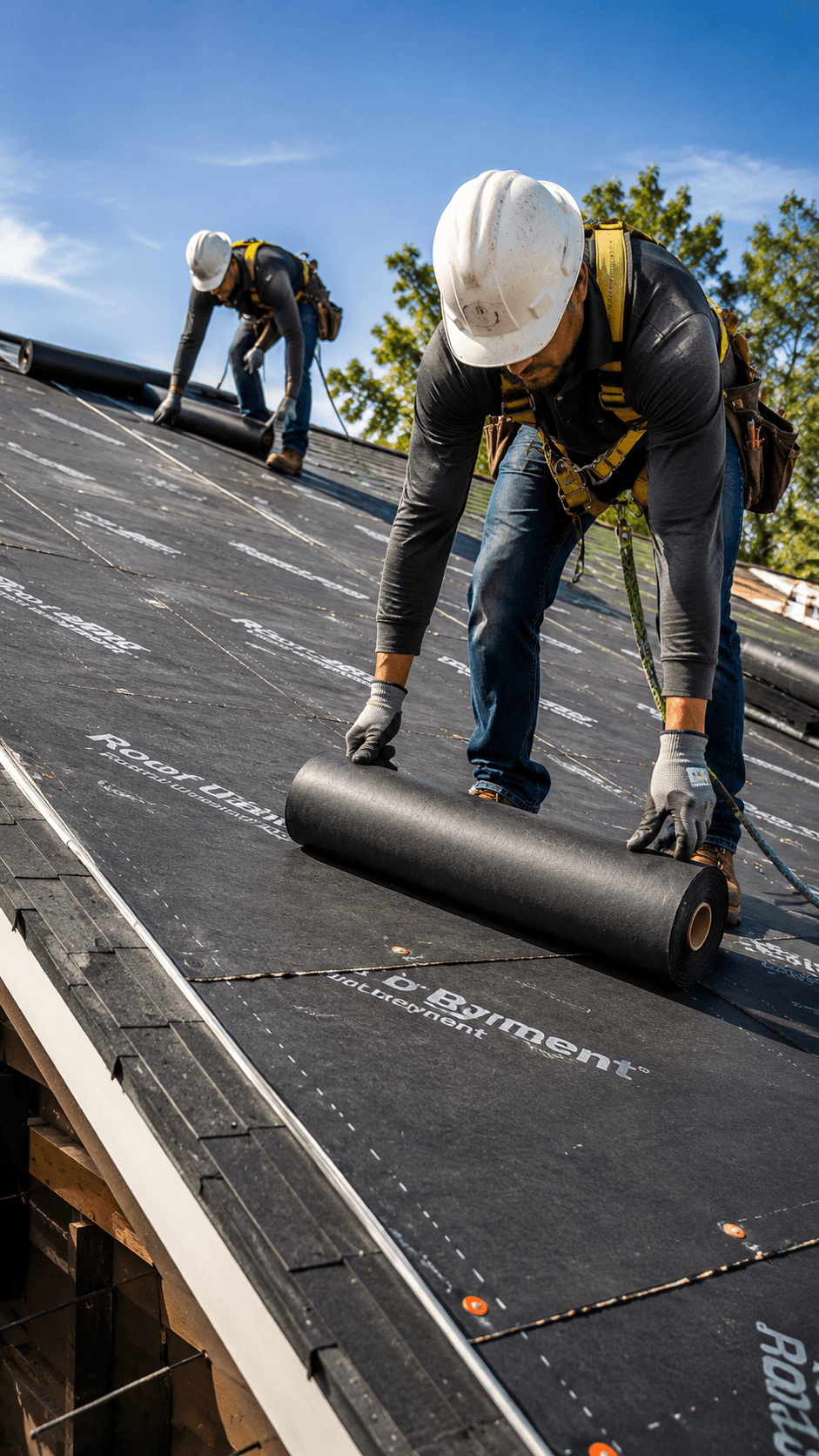
Underlayment is the moisture barrier between the deck and the shingles. Modern synthetic underlayment (Titanium UDL, RhinoRoof, Tri-Flex) is a woven plastic that handles rain better than traditional 15-pound or 30-pound felt. Most California re-roofs use synthetic today. The underlayment carries the secondary water-defense responsibility when shingles fail or wind drives rain underneath. Many premium manufacturer warranties require synthetic underlayment to remain in effect. A quote that doesn't name the underlayment brand and weight is leaving room to use cheaper felt — invisible to the homeowner once installed.
The role of flashing
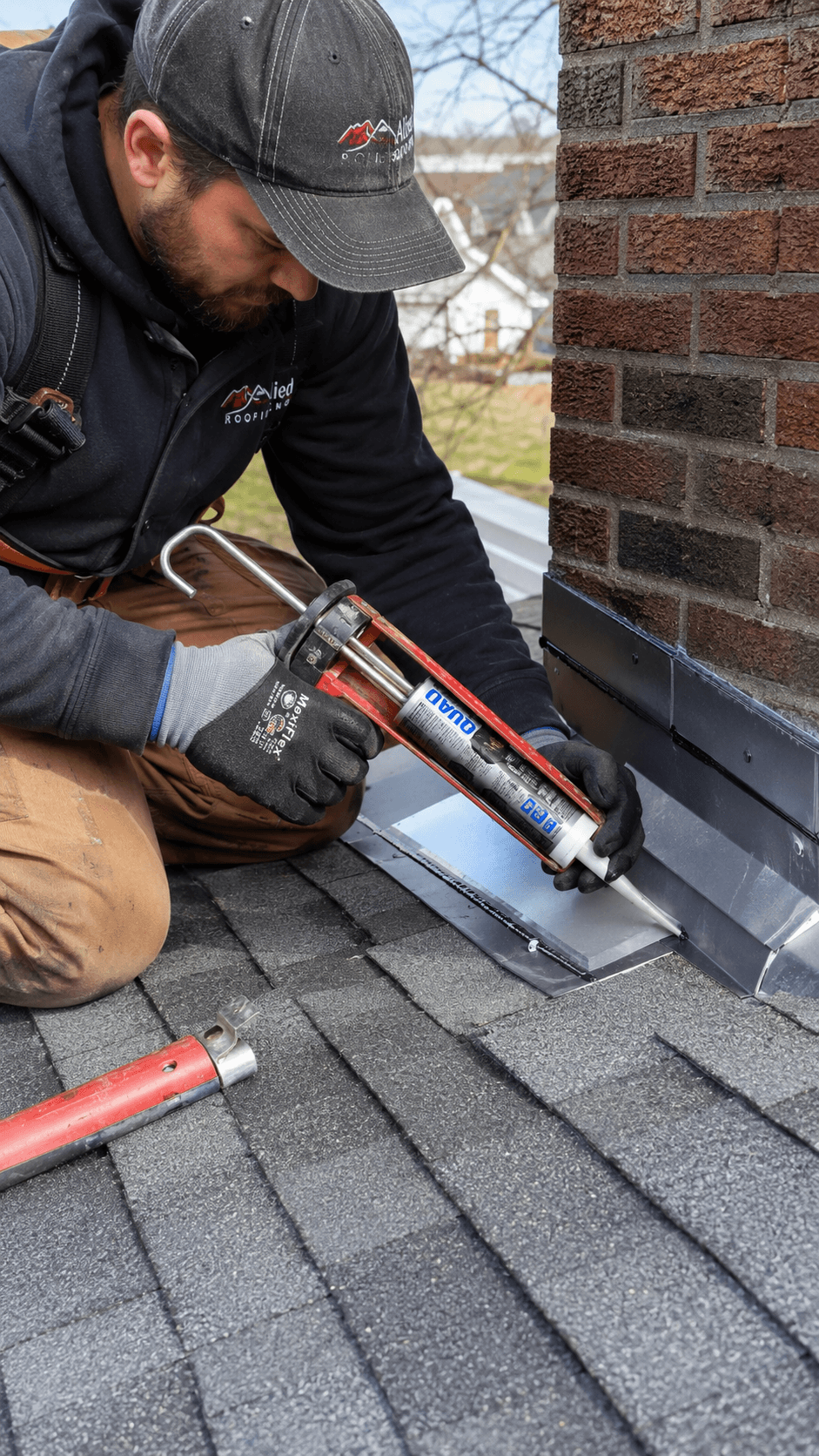
Flashing is the thin metal that seals roof transitions: where the roof meets a chimney, a wall, a vent pipe, a skylight, or a valley. It's where most roof leaks originate. Flashing comes in galvanized steel, aluminum, copper (premium), or pre-formed pieces for specific applications. On a re-roof, the flashing decision is whether to replace existing pieces or reuse them. Reusing chimney flashing or step flashing along a wall is a common corner-cut — invisible from the ground but predictive of leaks within 3–5 years. The quote should name flashing locations and replacement decisions explicitly.
The role of ventilation
Attic ventilation moves heat and moisture out of the space between the deck and the ceiling. Without it, summer attic temperatures can reach 150°F+, which aggressively ages shingles from underneath. Most California homes built before 1995 are under-ventilated by modern standards. Ridge vents (continuous opening at the peak) plus soffit vents (intake at the eaves) form the most common system. A balanced 50/50 ratio between intake and exhaust matters. Most manufacturer warranties are conditional on meeting ventilation specifications — a re-roof with skipped ventilation upgrades can void the warranty before the first claim.
The role of gutters and drainage
Water management at the roof edge — gutters, downspouts, drip edge, kickout flashing — affects roof longevity by keeping water away from fascia, soffit, and wall claddings. Most re-roof quotes don't include gutter replacement, but they should at minimum address drip-edge installation (required by most codes and warranties) and how the new shingles meet existing gutters. Sagging or rusted gutters at re-roof time are worth replacing as a bundle — adding $800–$2,500 to the project but avoiding a separate later project with a different contractor and another mobilization fee.
What homeowners usually miss
The categories homeowners most often overlook on roofing quotes: specific shingle product line (not just brand), underlayment brand and weight, which flashing pieces are being replaced vs. reused, ventilation upgrades vs. 'matching existing,' permit fee inclusion, deck replacement per-sheet rate, magnetic nail sweep at cleanup, workmanship warranty length and transferability, and what triggers a change order. These are the same items HomeGoSmart's quote clarity score automatically checks — they appear on every complete quote and are missing from most incomplete ones.
Simple roofing terms explained
Square: 100 square feet of roof coverage; the unit roofers use for sizing and pricing. Pitch: the slope of the roof, expressed as rise-over-run (a '6/12 pitch' rises 6 inches for every 12 horizontal inches). Valley: the V-shaped meeting line where two roof slopes intersect. Ridge: the horizontal peak at the top of two slopes. Rake: the sloped edge of the roof at a gable end. Eave: the bottom edge of the roof where it overhangs the wall. Soffit: the underside of the eave overhang. Tear-off: removing the existing roof to the deck. Overlay: installing new shingles on top of the existing layer.
Got a roofing quote? Check it before you sign.
Free, private, no phone required. We'll surface missing items, red flags, and questions to ask in under 3 minutes.
Frequently asked questions
Do I need to know roofing details to get a fair quote?
Not deeply — but enough to recognize when a quote is vague. A homeowner who can ask about underlayment, flashing, permits, and warranty gets meaningfully better quotes than one who only asks about price.
What's the difference between a re-roof and an overlay?
A re-roof removes the existing shingles down to the deck before installing new ones. An overlay installs new shingles on top of the existing layer. California code allows overlays in limited cases, but re-roof is usually the better long-term choice because it lets the contractor see the deck.
Why do two roofers explain the same project differently?
Roofers have different training, brand affiliations, and pricing strategies. Some explain by selling premium upgrades; others explain by minimizing scope to stay cheap. Both shape the quote. Recognizing this is half the work of comparing quotes.
Related guide pages
HomeGoSmart is not a contractor and does not provide legal, financial, or construction advice. Homeowners should verify license, insurance, references, permits, and written contract terms before hiring.